Moving a conference online in two months
I proposed and led the switch from an in-person conference to a free two-day virtual event. 280 people registered against a target of 150, and 171 attended
Organisation
Global Data Engineering & Business Intelligence Community
Audience
Data professionals (data engineers, data analysts, data architects, etc.)
Time period
July - September 2026
My role
I proposed the change of format, then led the marketing and delivery, from the campaign to live production and the handover to sales
Result
280 registrations against a target of 150, and 171 attendees (61%). 32 attendees matched our ideal customer profile and went to our sales team. We spent nothing on advertising.
The problem
We'd planned an in-person conference at Royal Holloway, as we had in 2023 and 2024. By late June, ticket and sponsor sales were too low to make an in-person event work. We also wanted senior people from abroad, including North America. An event near London asked them to fly in.
What I did, and why
Handled the change with care. Ticket holders received clear updates, full refunds, and an online place. All but one speaker agreed to present online.
Ran the campaign. I owned email and LinkedIn across our company pages and the CEO's profile. I wrote the registration page and worked with the designer to finish it.
Designed the day. Six hours of back-to-back talks is a lot to ask. So two colleagues hosted short discussions between speakers, and I built and hosted a 30-minute quiz from the talks. I ran the broadcast from my laptop with sponsor overlays and QR codes.
Fixed a problem mid-campaign. Four weeks in, with about 100 people registered, I found our confirmation emails weren't arriving. People had no joining link or calendar invite. I set up weekly exports and sent my own reminders with links and calendar buttons.
Handed over to sales. I checked who came against our ideal customer profile and passed the 32 best matches to our sales manager. I also surveyed attendees and non-attendees, and we recorded every session to reuse.
Handled the change with care. Ticket holders got clear updates, full refunds and a place online. All but one speaker agreed to present online.
Ran the campaign. I owned email and LinkedIn across our company pages and the CEO's profile. I wrote the registration page and worked with the designer to finish it.
Designed the day. Six hours of back-to-back talks is a lot to ask. So two colleagues hosted short discussions between speakers, and I built and hosted a 30-minute quiz from the talks. I ran the broadcast from my laptop with sponsor overlays and QR codes.
Fixed a problem mid-campaign. Four weeks in, with about 100 people registered, I found our confirmation emails weren't arriving. People had no joining link or calendar invite. I set up weekly exports and sent my own reminders with links and calendar buttons.
Handed over to sales. I checked who came against our ideal customer profile and passed the 32 best matches to our sales manager. I also surveyed attendees and non-attendees, and we recorded every session to reuse.
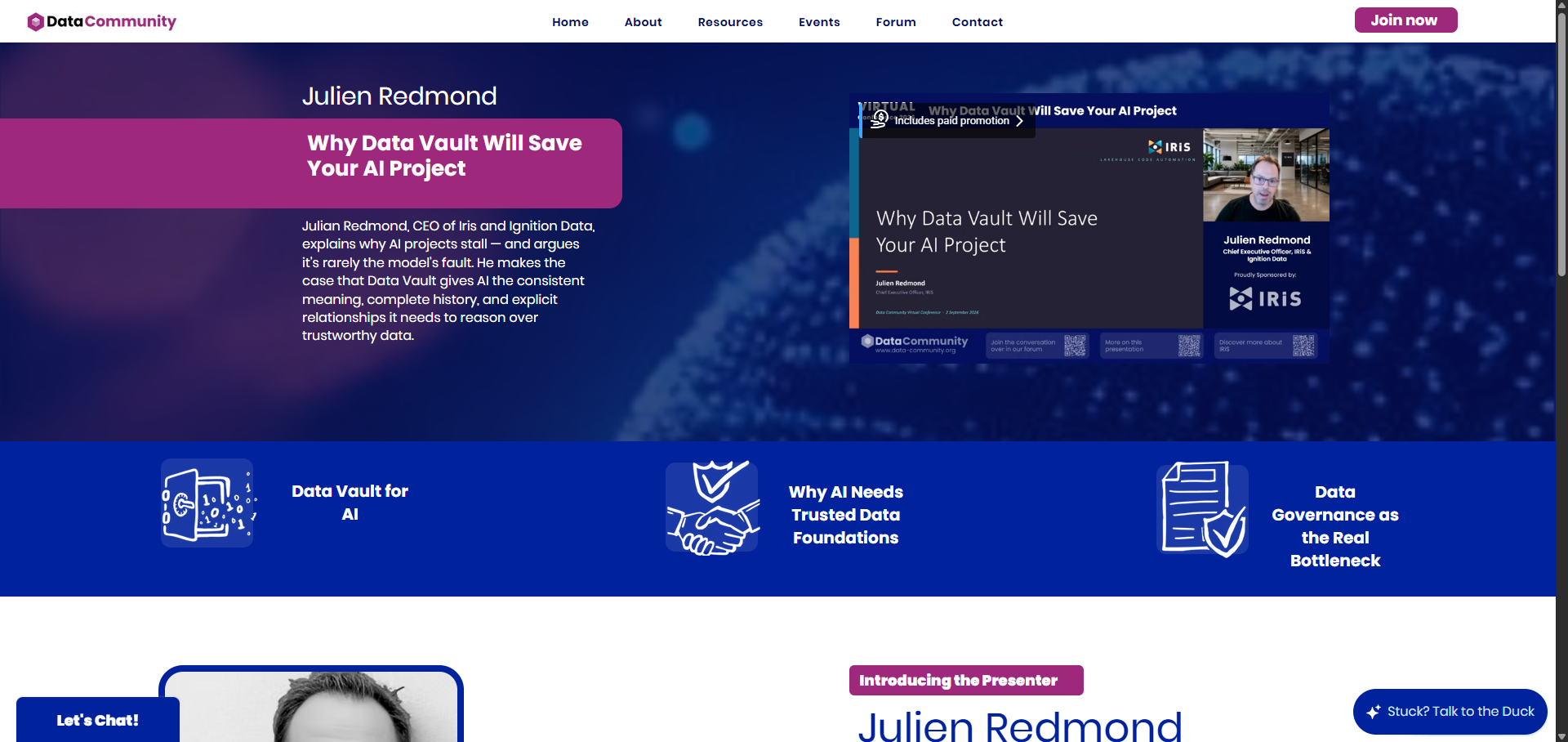
Post-event talk page. Recording and speaker info are made available to all community members after the event.
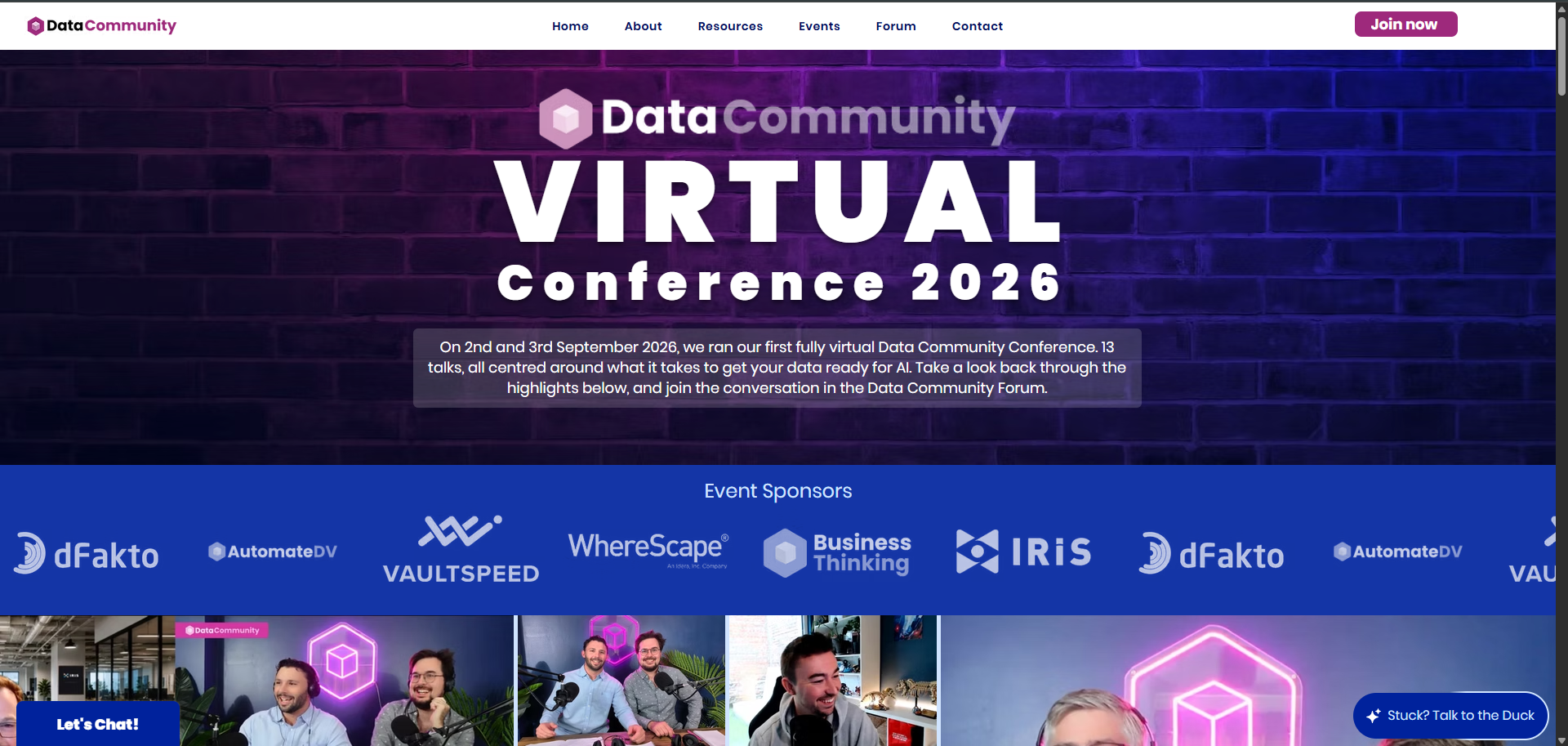
Registration page. Built around what people would learn, in each speaker's own words.
Results
280
registrations, against a target of 150
171
attendees, about 61% of registrants
32
contacts matching our ideal customer profile, passed to sales
£0
ad spend
What I learned
Test the whole journey from an outside email account before launch: sign-up, confirmation, calendar entry and joining.
Write the backup joining email before the event starts.
Decide how to count each person once at the start, so it's easy to see who came back on day two.
Run the broadcast on a platform built for webinars.
How this transfers to sport
Changing format. When a race or event has to move or change, the job is the same: refunds, clear updates and keeping people on board.
Turn-up. Getting registrants to join is the same problem as getting entrants to the start line.
Live delivery. Streamed classes and virtual challenges need the same mix of tech, hosting and looking after people.
Get in touch
Email me about marketing in sport, fitness or health. I reply within two working days.