Turning a live training into an on-demand course
I proposed, produced and launched an on-demand version of our free live training. Then I built a 14-email follow-up series that changes with each learner's progress. 76 people signed up in the first 24 hours.
Organisation
A global data consultancy
Audience
Data practitioners whose organisations are weighing up Data Vault
Time period
Recorded on 25 June 2026 and launched on 22 September 2026. Follow-up built in October 2026.
My role
Everything from the proposal and recording to the launch. Then I planned the follow-up, wrote all 14 emails and built the automation.
Result
76 sign-ups in the first 24 hours. 53% of sign-ups had finished the course at the time of reporting.
The problem
Since 2020, we'd run a free two-hour live introduction about every two weeks. Fewer than half of those who registered usually came, and some sessions had five or six people. The 3pm start ruled out people in other time zones. Each session took about two hours of the CEO's time and two hours of my admin.
What I did, and why
Made the content. I recorded the session in our podcast studio and edited it from two hours down to 80 minutes. I split it into 14 short videos across two parts and added quizzes.
Built the course. I set it up on our website. Each sign-up alerts our sales team, and I can see where each learner stops.
Launched it. I pitched it as a free introduction from an expert, giving people the business context to explain the idea to colleagues. I launched it through our email list, LinkedIn and our community forum.
Built the follow-up. I planned three journeys, based on where each person had got to:
Not started (4 emails): one short teaching idea per email, to get them to press play.
In progress (4 emails): the work problems the course prepares them for, to get them to finish.
Finished (6 emails): a brief they can forward to their manager, a first project plan and proof from a client project. Then an offer.
I connected the website to Mailchimp through Zapier. Each person's progress sets a tag, and the tag decides their journey, so people move on as they progress. Good-fit leads are offered a call with our business development lead. Everyone else is offered our paid two-day course.
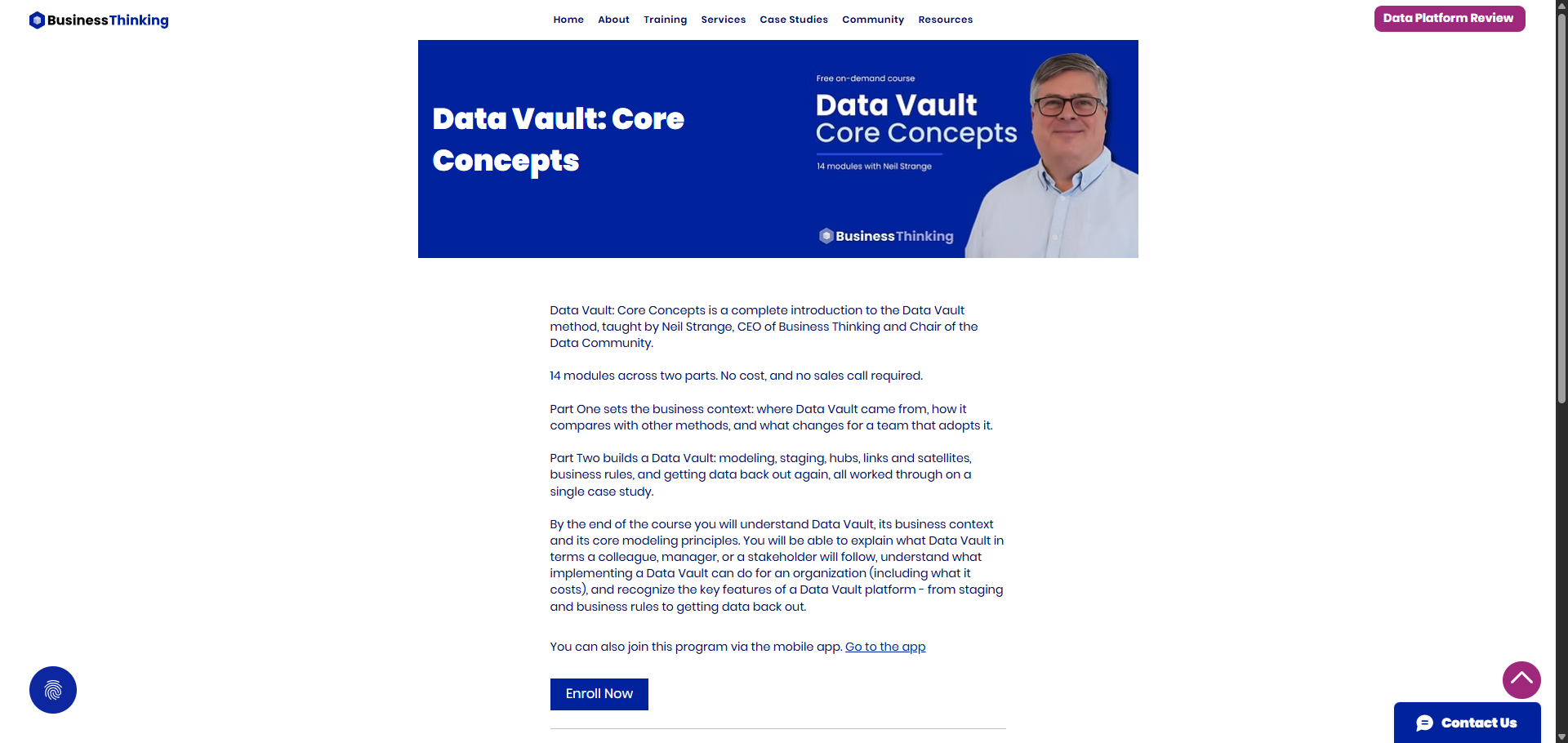
Landing page. It sold the course as a free expert introduction to help learners explain Data Vault at work.
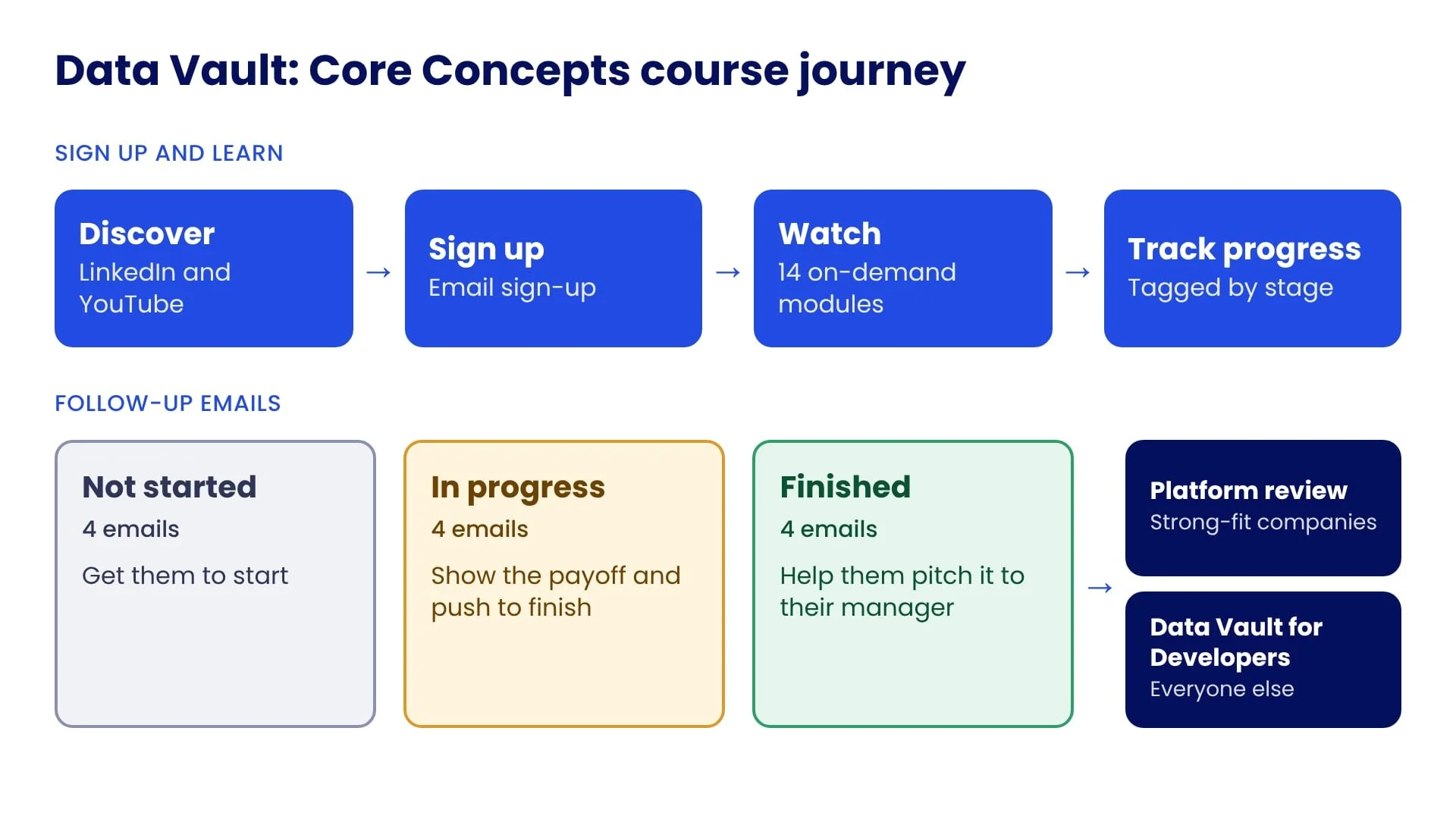
Follow-up journeys. Progress decides which emails each learner gets.
Results
76
sign-ups in the first 24 hours
53%
of sign-ups had finished the course at the time of reporting
135
landing page users
80 min
course length, edited from two hours
What I learned
Editing a long technical recording takes far longer than it looks. Mine took about a month, so next time I'd book it in as a fixed block. My next step is to use the drop-off data to improve the weakest videos.
How this transfers to sport
Lifecycle emails. Not started, in progress and finished is the same split a fitness app or training plan uses to get people going, keep them going and offer the next step.
Next steps by fit. Sending good-fit leads one offer and everyone else another is how a gym or app moves members to the right upgrade.
Get in touch
Email me about marketing in sport, fitness or health. I reply within two working days.